- May 2, 2024
Wildflower
- Stacy Collins Johnson
- 0 comments
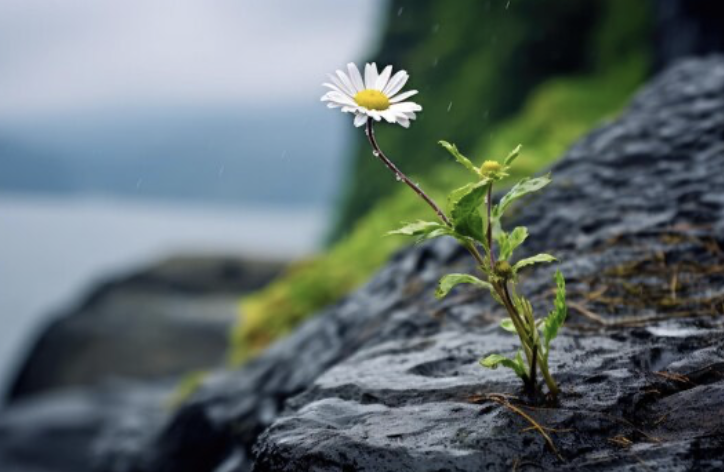
I’m a hiker. I’m always in awe of nature’s magic. For instance, if you’ve ever had the opportunity to hike in the mountains, have you ever noticed how at high altitude on a rocky terrain a gorgeous wildflower can live clinging to a steep, sharp, desolate cliff - and beautifully bloom complete with striking colors and healthy green stems? How can a masterpiece of nature clearly unlike its surroundings thrive well in an environment hostile to its existence? Resilience. Well, oftentimes that's how we have to be as well. The wildflower isn’t judged by the rocky cliffs that surround it. There is no judgment. That’s something we do. We could, however, ignore the chatter and just bloom. It’s true that we neurodiverse people may find ourselves existing on a cliff – the metaphorical cliff of life. It’s precarious living for sure. Yet like the gorgeous wildflower, we can find our niche and tuck in just enough to take in nourishment so that we too can bloom. Let’s nurture our resilience like that wildflower and plant our roots with pride. Its Spring! It’s time to bloom.
Wildflower
I’m a hiker. I’m always in awe of nature’s magic. For instance, if you’ve ever had the opportunity to hike in the mountains, have you ever noticed how at high altitude on a rocky terrain a gorgeous wildflower can live clinging to a steep, sharp, desolate cliff - and beautifully bloom complete with striking colors and healthy green stems? How can a masterpiece of nature clearly unlike its surroundings thrive well in an environment hostile to its existence? Resilience. Well, oftentimes that's how we have to be as well. The wildflower isn’t judged by the rocky cliffs that surround it. There is no judgment. That’s something we do. We could, however, ignore the chatter and just bloom. It’s true that we neurodiverse people may find ourselves existing on a cliff – the metaphorical cliff of life. It’s precarious living for sure. Yet like the gorgeous wildflower, we can find our niche and tuck in just enough to take in nourishment so that we too can bloom. Let’s nurture our resilience like that wildflower and plant our roots with pride. Its Spring! It’s time to bloom.
Everything Everywhere All At Once
Your dreams, visions, ideas coming to life
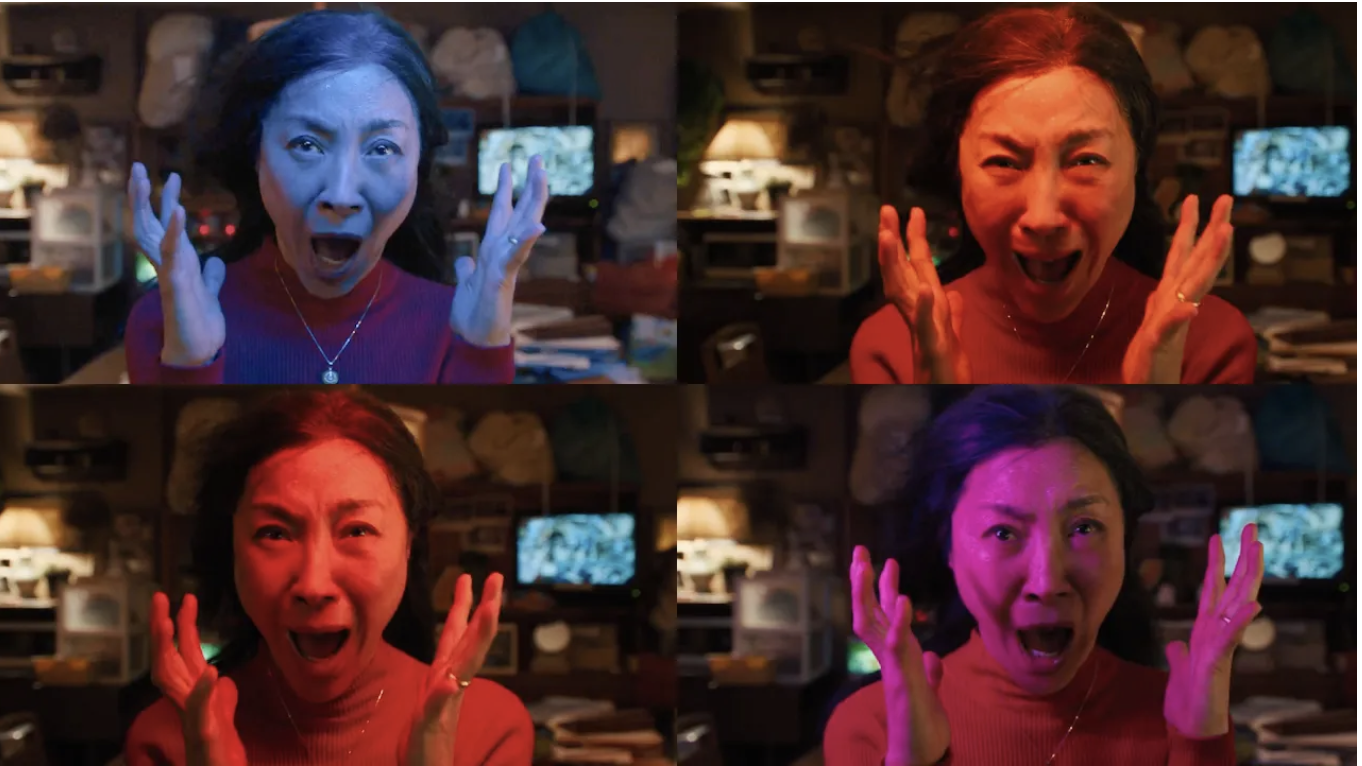
Oftentimes, people with neurodivergence make connections, see patterns, have a vision about something and can envision it coming together. It might be a grand idea. Or a musical composition. It might be an art project or groundbreaking programming code. Or it might be a colorful, kind way to be in the world. It might be the matrix... A person who views life through a unique lens has a lot to offer.
As a neurodivergent person, I think I can say for all of us that we feel it. It can be very exciting. We can sense something. We feel it’s there! So close you can taste it. Yet getting there, to reach that vision, goal, dream, idea, well, you wanna do all the things at once because that’s how you see everything. It may, in fact, correlate to the reason why some people who are neurodiverse or ADHD or AuDHD or autistic or dyslexic, whatever, neurodivergence you might experience. Chances are you also have your own unique organizational plan as well. True, many won’t see you’re vision - or your ways of working - as manageable. Your way of thinking and doing is different. And “different” can feel scary to those who don’t get it. It’s in our survival DNA to perceive change with suspicion. This can hold us back in the long run. That said, if you’re neurodivergent - your mind is uniquely wired - chances are you do have some highly innovative and creative ideas worth sharing. When you mention them to the mass neurotypical majority however, you’re met with confused stares. Am I right? Ya, I am.
Your desk may have everything out where you can see it - and everything on the floor, too. This is especially the case if you’re in the middle of an intense special interest. That organizational method of having lots of piles strewn around the room might seem very disturbing to someone else. In fact, some people feel anxious around such a system. They may have OCD, they may not, who knows? But to a person who has a neurodivergence when they have all these ideas all at once - and they're in the middle of it, they can visualize quite clearly all the pieces coming together nicely - preferably all at once. Everything everywhere all at once.
That said, if it isn't right there in front of you, chances are pretty good you might forget that piece, that little bit of brilliance. So, there is a method to what some people see as a madness. Honestly though it’s simply a different way of organizing things.
The challenge is that this “everything everywhere all at once” can lead to overwhelm as well. Your thoughts may be firing off all at once, and, while you’ve got every window and app open on your laptop, you’ve also got every post-it, sketch, book, pen strewn around your workspace as well. No doubt your floordrobe is full. Let’s say you have this concept for an award-winning film running around in your head. You know exactly what needs to happen in order to bring this concept to the screen. You may even have most of the tools you need to physically bring this film to fruition. Your excitement, energy, focus and interest is primed. So, you hole yourself in your room and eagerly get started. It’s going great! You’ve worked diligently, creating an impressive script and storyboard. You haven’t slept or eaten in at least two days. You are in the zone!
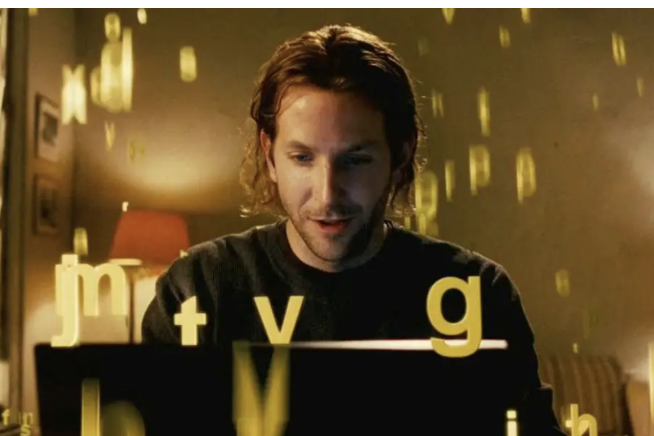
You are doing everything everywhere all at once, And you are going to do it perfectly because that's how you see it. Yet when you really get deep in there, you realize that some of the necessary tasks are, well, boring. Editing is not your jam. It’s too detailed plus you can’t figure out the software. In addition, you find yourself getting angry when a loved one interrupts to ask you to dinner.
Overwhelm takes hold, followed by burnout. Then quitting halfway, and massive doses of shame. Before you know it, you are feeling hopeless, isolated and shut-down. Sound familiar?.
If you sometimes feel that way, you're not alone. You know, I have my qualms with IQ tests (that’s for another time), but they've done studies that indicate the higher one's creative intelligence the messier their desk.
If you or someone you love has a very messy desk, remember you may be considered highly creative, gifted or genius. Why? Your brain is fired up! You have a lot of activity going on up there. And you know what? It feels overwhelming. But guess what? All that activity is a good thing. Like a wild stallion you just have to learn how to harness it.
So the next time you find yourself overwhelmed and angered over an interruption, give yourself some grace. Breathe. You’re okay, and it’s okay to create things your own way. That said, if your way of “everything everywhere all at once” leads to burnout and unfinished projects, you might want to tweak your methods without sacrificing your busy, beautiful brain. Perhaps set up a schedule with timers to ensure your take breaks to move your body and eat something. Perhaps you chunk the amounts of work so that you focus on smaller portions throughout each day. Perhaps you can set aside time and comfortable space for tackling those tasks you find difficult or boring. And maybe you can instill a ‘body double.’ Or, if you prefer to fly solo, consider giving yourself a long onramp: give yourself extra time. Perhaps you can ease up a little on insisting on perfectly bringing your vision to life exactly as you’ve pictured it. You might be pleasantly surprised.
If you need a dopamine fix, take a break. Move your body. Eat something nutritious and tasty. Drink water. Play a brief game like Wordle (but please don’t go down any gaming rabbit holes.) Breaks are necessary - think of them as pitstops. Breaks are a time to put some gas in the tank so your engines can purr.
Don't feel that you have to complete everything everywhere all at once. It was an EXCELLENT movie - however it wasn’t produced with everything, everywhere all at once. Trust the process. Your mind might see it there and you might feel like you could just grasp it and put it together. You also might know how it should come together, but the process of actually putting something together has a lot of steps that are tedious and time consuming. And, of course, you're going to want to do it perfectly. Please remember: Nothing in nature is “perfect.” Have you ever seen a tree that stands as straight as a ruler and has exactly equally balanced branches with an equal amount of exactly shaped leaves? No. It doesn’t exist. The beauty is in its imperfections. Good enough is beautiful and brilliant.
Even if you’re anxious and excited to bring your vision to life asap, taking time is fine. It’s equally fine to have all of your ideas out in piles on your desk or floor. If that’s what works for you, embrace it. Warn the naysayers, then ignore them. Their discomfort is theirs. If everything in sight is how you feel organized for you, that's great. Own it. Nothing wrong with it.
Just remember to be kind to yourself. Take notes if you need to, if that's what works for you. Sometimes the act of writing something down with a pen helps transfer that information to your long term memory. If you get overwhelmed, take a lot of breaks. Plan for them. Give yourself a timeline if this helps. If it doesn’t, and it isn’t required, don’t use a timeline. Take the time upfront to figure out what methods work best for you.
If you accomplish just a little bit each day, be sure to pat yourself on the back for it. Your ideas will come together. If you are afraid of putting your ideas out there, it’s understandable. A lot of neurodivergent people experience rejection sensitive dysphoria.
So it’s important you remind yourself that others are not thinking of you. Truly people are too concerned with their own lives to be concerned about anyone else's special interests. They might take pleasure from something you create, or it might not be their taste, but they are not discounting you as a human. It is not personal. Please remind yourself of this. Your ideas, projects, endeavors are worthy. Do it your way, with customized tweaks to help you shine. You’re a masterpiece.
Our NeuroVibe Journey
Our Journey
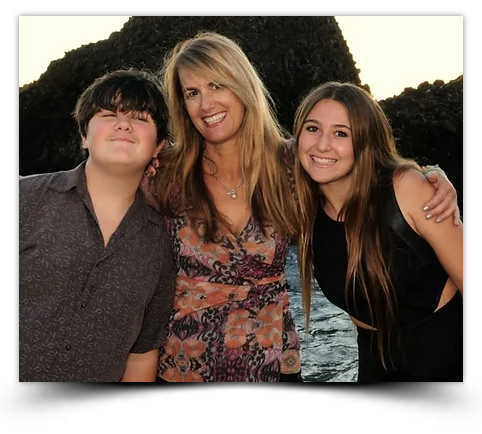
Hi there. My name is Stacy Collins Johnson. I'm the mother of 2 incredible young adults, one being diagnosed on the autism spectrum, and the other is considered neurotypical. She now works with people with challenges. It's been an unexpected journey – full of scary bumps along the way and delightful surprises too. Though it wasn't the life we had imagined, It's been exceptional. We're still learning, struggling, laughing and celebrating.
I've learned so much along the way. Prior to becoming a mother of a neurodiverse son, I held a more naive worldview. I thought I had control over how my life would evolve. Ha! Well, I've grown a lot since then and am grateful for who I have become as part of this experience. The special needs or neurodiversity community is full of resilient mothers, fathers, sisters, brothers, and individuals who rise each day to face a different challenge. Since society isn't designed for those with differences, life can be difficult if you or a loved one are considered neurodiverse. Everyone deserves the opportunity to let their light shine. It can't happen if you spend your time as a square peg trying to squeeze into a round hole. We tried this for years with disappointing results. A better approach would have been to embrace differences and chart a customized course that works for everyone.
I'm not trying to be Pollyanna about this, but zooming out with a bit of perspective, I can now see that I'm a better person today because of my exceptional experience. And, in fact, I've been so inspired that I switched my career focus to become certified as a special needs life quality coach. I specialize working with neurodiverse young adults and their families. In addition to being a coach, I'm also an artist, world traveler and instructional designer.
To be sure, that's plenty of hats, and I love each of them. This many hats, however, is also indicative of ADHD, which as part of my journey as a coach and autism mom is something I recently learned that I experience too. It explains a lot and also gives me a personal appreciation for those who think and do outside the box.
Neurodiversity Movement Today
As a society, we're currently at an interesting inflection point. Change is happening rapidly. With change comes a lot of uncertainty and fear. I'm sure you knew that - you see it in the headlines every day.
So even though the world has been going through a challenging time full of toxic consequences, there's also been a growing opposing force countering the negativity. This force is around acceptance and love. There's now more awareness around mental health, especially among the younger generations. Personally, I think they're far wiser than my age group.
Part of this growth in acceptance is the neurodiversity movement. I don't think this is purely a political civil rights movement, though there are certainly key components. Rather, I believe this movement to be about honoring the balance between providing warranted accommodations, medical interventions, and support with accepting, embracing, and even celebrating the favorable traits of neurodivergence. It's about removing the stigma associated with difference. It's about description versus disorder.
Description vs. Disorder
You are not your label. Labels are just descriptions of a series of conditions or behaviors or traits. These descriptions shouldn't come attached with an overdose of judgment. They should be taken as something as innocuous as a person's eye color. You know what I mean? We don't devalue and isolate a person based on their eye color. (At least we'd better not!) Think about it: We don't belittle those with cancer or asthma. In those cases, we still see the human, the soul in front of the disease. Same should hold true for neurodivergence - and it's up to us to shift the paradigm from the ground up, one person at a time, so that neurodiversity is digested and accepted by society as a whole. Remember this mantra: DESCRIPTION instead of DISORDER.
If you're wired differently than the majority, you are indeed unique - yet you are in no way alone. There are millions and millions who are wired differently - enough to fill several continents. Yet the neurodiverse haven't been accepted. This has been tragic - not only for the neurodiverse but for the world at large. Each person has much good to offer. When we shut down an entire group, we rob ourselves of their voices, their gifts. It's short-sighted at best; cruel at worst. A person who has been given label or diagnosis has much to give and deserves love and respect like anyone else. So let's start shifting the paradigm one person at a time. Let's see the person first, not the label. Everyone is different after all - with different needs, world views, and dreams.
I believe in meeting a person where they are, listening to get to know them truly, and partnering with them from there to craft a personalized plan to help navigate a world that wasn't designed with them in mind. I want to help others grasp this notion deep down, and together we can shift the paradigm around how we view those with difference. My dream is to help everyone to feel seen, heard, and understood. That's the paradigm shift. I'll continue to do my small part to help make that dream come true.
Customized support for a customized life
All that said, it still is difficult to manage in this world if you have a difference. I'm not trying to discount that at all. If you or someone you love has a difference, life can be daunting. Services are expensive, sparse, and confusing. Public opinion is mixed at best. It can feel isolating and lonely.
Loneliness is epidemic. Stress is constant, percolating there in the background. There are tools, though, that we can use to determine a personalized plan for individuals and families alike. This can help make life easier and more enjoyable, and it can help everyone feel seen, heard, and understood, which is something every human deserves.
After all, there's only one you - and you're a masterpiece.
Description vs. Disorder

I am so heartened by what I've seen on social media, TikTok in particular, with the rise in acceptance of autism, ADHD, bipolar, mental health issues, neurodivergence in general. I am equally heartened by what I see in this growing community. It brings tears to my eyes as I witness such acceptance and awareness.
All that said, when a person receives a diagnosis or label no matter their age, the reflex is to tighten up. It can feel like a punch to the gut. Shame and fear boil up. Most aren't exactly excited to share this news - there's too much judgment and stigma. And, at our caveman core, we humans fear being cast out from the tribe. So I propose a new and refreshing way of digesting a label: Since we have now seen an upswing in understanding, it's the perfect time to begin shifting the way we think about diagnoses and labels. Change is hard. It certainly doesn't happen over night. It also won't take hold if it's an edict passed down from the powers that be... So, we begin the shift with each of us - individual by individual.
Wondering WTH I'm talking about? Shifting how we interpret neurodivergence. It's Descriptive language vs. stigmatizing terminology. Consider the following terms: dis-order or dis-ability: "dis" is negative - subtractive. An "ability" has been taken away, to create "less than." It can be argued it's ableism. I'm in line with the belief we should shift the paradigm here so we digest language that is person-first instead of identity-first. This helps us see the individual. Other terms are difference, diagnosis, special needs, neurodiverse. There shouldn't be negative judgment around these. Terminology such as this should be neutral and descriptive, not stigmatizing. Johnny IS autistic? Mary IS bipolar? Really? Are Johnny and Mary their labels? Of course not! They are individual souls with their own valuable dreams and gifts. Yet when we say "Johnny IS autistic," it allows a diagnosis to blanket-out his personhood. It's time we flip this.
How do you think about this language? Are there labels you celebrate or shy away from? Do they scream outcast? Can they feel isolating? Can they make you feel like shit? Yep. Yep. Yepperie and You Betcha. These types of terms tend overshadow the individual by stepping in front, allowing people to see the person as less-than. This was unintended to be sure. Labeling and categorizing is how we humans make sense of the world. It's also how we've researched cognitive science. Additionally, once given a diagnosis, services are opened up - so there's a practicality as well. So yes, I don't doubt these terms were coined with good intentions. However, unfortunately, in our society, which wasn't built to accept anything or anyone even slightly different (aka not as easy to control), these terms project negative stigmas, and we digest them. The label is far too often placed in front of the person - blocking out their light, their essence, their humanity. It's time we change that.
The great Temple Grandin is quoted to have said, "different not less than." Well, yes. Different. Does that warrant being outcast? No.
If you are told you have Autism Spectrum Disorder does that mean you are a disordered person - as in, not a whole human? Of course not. But that's how it feels. So, let's call neurodivergence and any diagnosed condition what it is: A DESCRIPTION. All of these terms are mere descriptions of traits, behaviors, physical conditions. They have zero to do with who a person is.
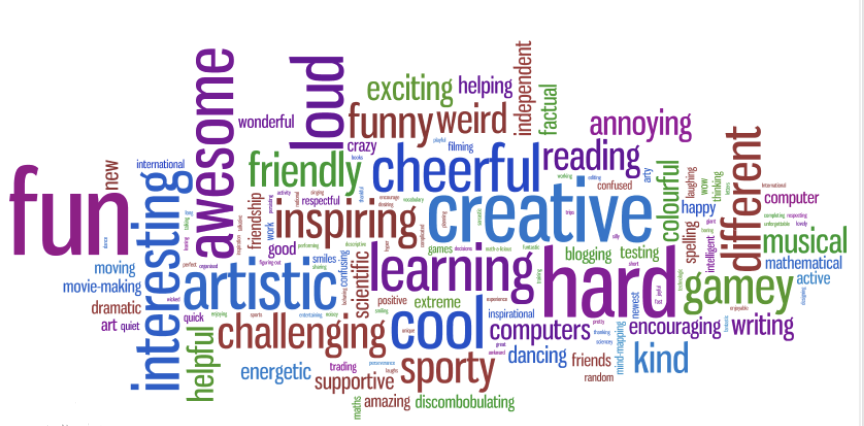
From now on it's non-judgmental descriptions only, with no bearing on a person's value or worth. A description certainly doesn't mean you should attempt to change yourself in order to fit in with the mass majority, where as a disorder might make you think you must change to fit in - because you are not enough. That is a lie. You are enough. You are perfect as you are. Your voice matters.
There's really no reason for negative stigma or judgment.
I'm not trying to promote identity politics and I'm not suggesting people who have a diagnosed condition don't face challenges and don't require supports. I know first hand how extremely challenging it is to navigate a society that wasn't built with you in mind. Also, I'm not saying you should simply pull up your bootstraps and deal with it. No way am I suggesting that. Being neurodiverse is often lonely, confusing, nerve-racking and difficult on the daily. Supports and accommodations are absolutely warranted - and when these supports are customized with the individual in mind, they can really help someone thrive in this world, which is what we all deserve.
You deserve the tools so that you can navigate this world so that you can live your best life. You absolutely deserve that.
When you build your personalized toolkit for life, begin with this key foundational tool: the knowledge that you are a masterpiece. You are perfectly imperfect just like everyone else. You are not defined by a professional's assessment of specific traits. They are descriptions and their purpose is to help you chart your best path forward based on your unique needs.
Being neurodivergent is often described as being different than the majority. Yet if you gathered those who consider themselves neurodiverse, you could fill at least two continents. So you're not alone. You're outstanding, but you are not alone. If you're neurodivergent, think of yourself as a redhead in a sea of brunettes. You stand out in a stellar way! You are who you are in part because of your descriptive traits, not in spite of them. Your wiring does not define you. In fact, it often allows you to see the world in a better way.
When society truly sees those who think and do "outside the box" with empathy, inclusivity, acceptance and respect - to the degree to which there's no debate - then we'll know we've truly shifted the paradigm.

We should look at humans the same way we view all things in nature. Like a beautiful, blooming tree. Are its branches exactly the same? Aligned in a straight, balanced row? Are all the leaves exactly alike? No. The beauty is in the variety.
In order to really get there, we need to drop the stigma around these terms. So let's start saying "description" instead of "disorder." That takes the sting out of it - because you're a masterpiece just as you are.